

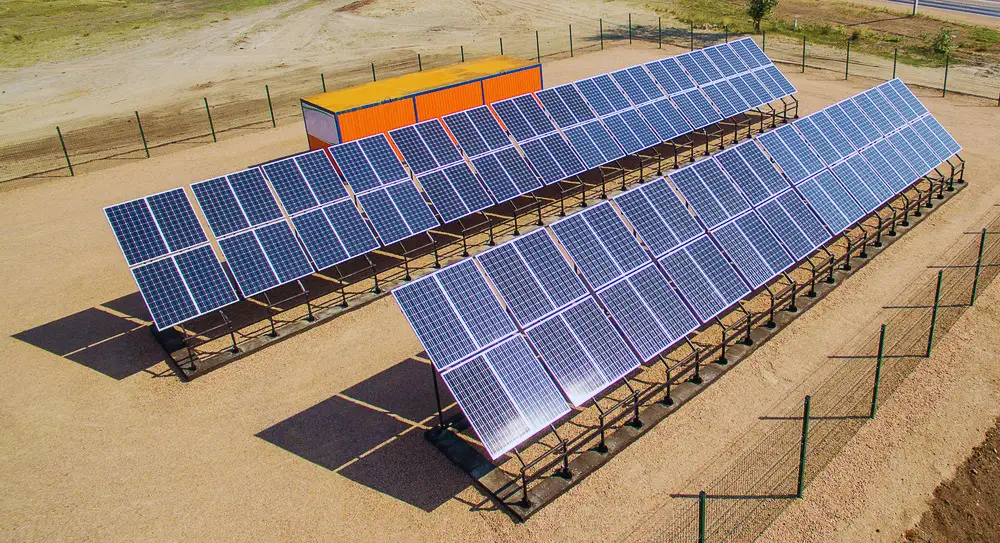
This blog explores the most effective mounting structures for solar farms and helps you understand which design is best suited for your needs.
Mostly GMS are widely used options for solar farms.
⦁ Maximum energy generation,
⦁ Cost effective
⦁ Superior scalability
⦁ Good utilization of land
⦁ Optimal tilt
⦁ Flexibility to integrate tracking systems
⦁ Better performance
⦁ Easy installation and maintenance
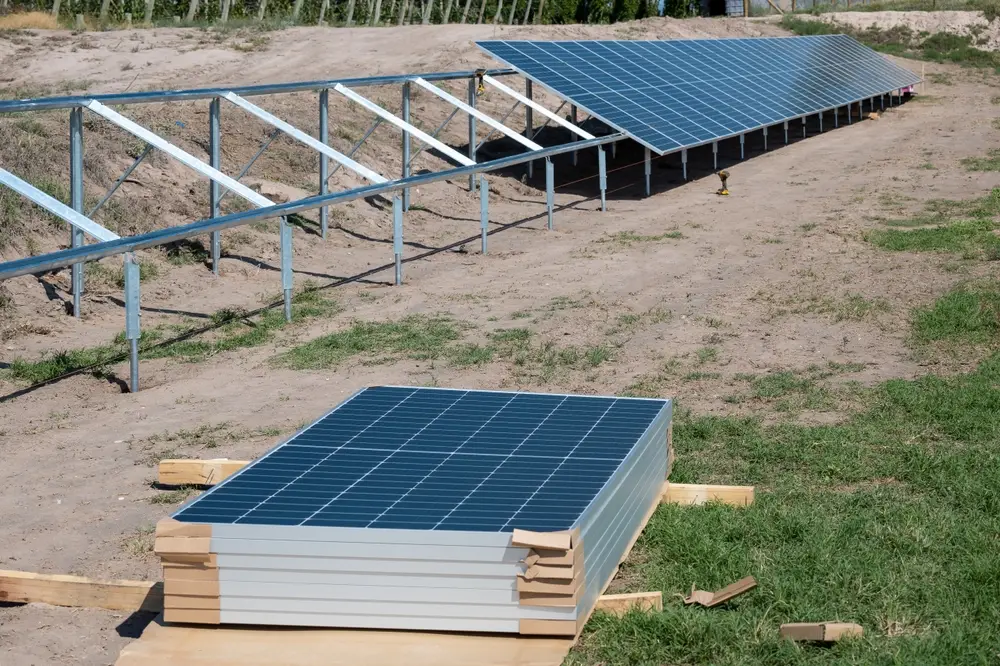
3.1. Ground-Mounted
GMS is the most commonly used type of mounting structure for solar farms because it is available for lesser expenses and is easy to install.
3.2. Elevated Structures
When land has uneven terrain, risk of flooding, or multiple use (e.g., agriculture), in such cases, Elevated Structures are used. It is priced on the higher side, but it adds flexibility required in an uneven landscape.
3.3. Fixed tilt mounting structure
In India most widely used mounting systems in solar farms are the Fixed tilt structures.
How it works:
In this type Solar panels are installed at a fixed angle, basically optimized based on the basis of the given site’s latitude to receive maximum sunlight throughout the year.
Advantages:
Disadvantages:
3.4. Single axis tracking system
Single-axis trackers are gaining popularity, especially in large-scale solar farms. The panels adjust themselves in this case to receive proper and maximum sunlight throughout the day and the year.
How it works:
Panels rotate along usually east to west on one axis to follow the sun’s path during the day.
Advantages:
Disadvantages:
3.5. Dual axis tracking system
Dual-axis trackers offer maximum efficiency as they have two axes that allow panels to move horizontally and vertically to receive maximum sunlight.
How it works:
Panels move both horizontally and vertically, tracking the sun throughout the day and across seasons.
Advantages:
Disadvantages:
Suitable for:
Specialized applications where maximizing output outweighs cost concerns
There are few factors that affect the system’s performance, and the system needs to be designed after considering those factors.
4.1. Land condition
Mounting structure’s foundation and design are influenced by several factors such as terrain, soil type, wind speed, and seismic activity in any given region.
4.2. Orientation and Tilt angle
Tilt angles should be adjusted in such a position that it captures maximum solar radiation. In India, south-facing panels with a tilt angle close to the latitude generally perform the best.
4.3. Choosing the Material
Widely used materials are galvanized Iron and aluminum:
Galvanized Iron offers strength and durability
Aluminum is lightweight and corrosion-resistant
4.4. Type of Foundation
Concrete (RCC): Suitable for uneven and rocky land.
Pile-driven foundations: suitable for large solar farms; cost-effective and quick to install
Ballasted systems: Used where ground penetration is not possible
4.5. Wind resistance
Structures must be designed to withstand local wind speed and changes to prevent any damage due to extreme weather conditions.
5. Conclusion
Finally, by carefully analyzing factors such as your location, budget, project size, and long-term output goals and going for an effectively engineered design, you can pick up your ideal design. This way, you can ensure the best durability, efficiency, and ROI on the project.
Ground mounting structures are the most ideal option for solar parks because they generate more power, are easy to install, and require minimal maintenance. Fixed tilt structures are the most widely used option; additionally single-axis trackers are gaining popularity too because of their capacity to improve energy output significantly.