

1. What are Rooftop Solar structures?
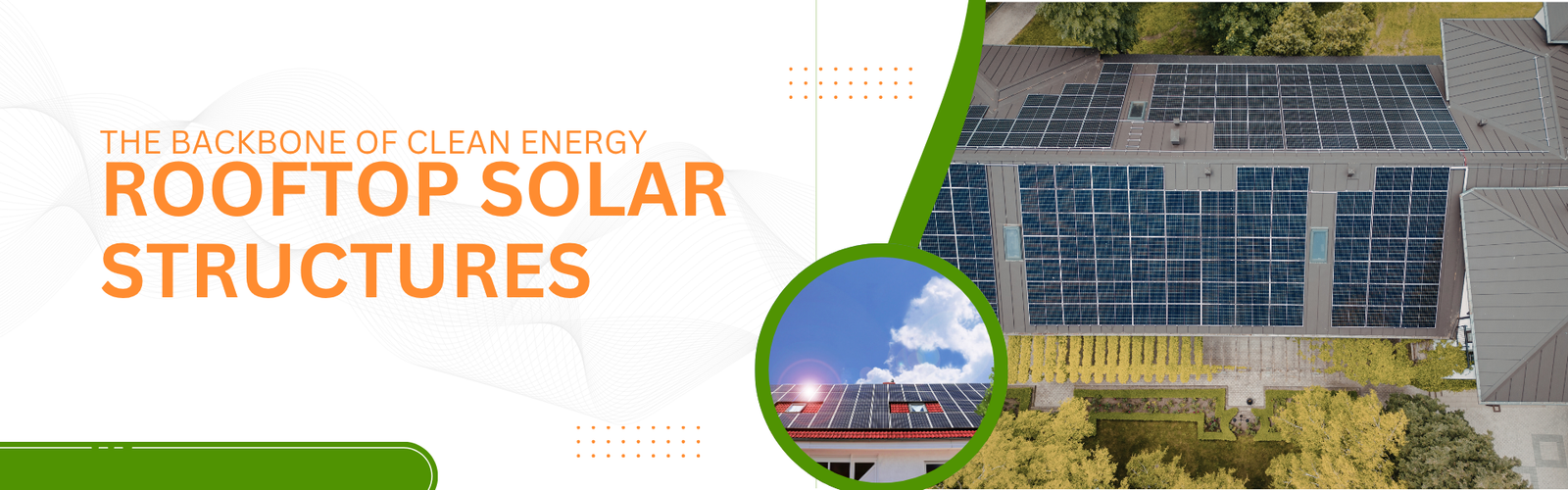
As India continues to accelerate its transition toward clean energy, rooftop solar systems have emerged as a practical and widely adopted solution for residential, commercial, and industrial sectors. At the core of these systems lies an often overlooked yet critical component—rooftop solar structures. These structures serve as the physical backbone that supports solar panels, ensuring their stability, safety, and optimal performance over the system’s lifespan.
Rooftop solar structures are specifically designed for frameworks installed on the roofs of buildings to securely hold solar panels in place. Their primary function is not only to provide structural support but also to position the solar panels at the correct tilt and orientation to maximise sunlight exposure. By doing so, they play a direct role in enhancing energy generation and overall solar system efficiency.
2. Types of Rooftop Solar Structures
Rooftop solar structures in india are available in different types, depending on the roof design and project requirements. Fixed tilt structures are the most commonly used, where panels are mounted at a predetermined angle to capture maximum sunlight. Flush-mounted structures are typically used on sloped roofs, where panels are installed parallel to the roof surface, offering a sleek appearance and minimal structural alteration. Ballasted mounting systems are suitable for flat roofs where drilling is not a preferred option; these structures use weight to hold the system in place without penetrating the roof of the building. Elevated structures are another option, where panels are installed at a higher height, allowing for better airflow, easier maintenance access, and even dual use of space beneath the panels.
Also, they are categorised based on their grid system as follows:
On-Grid: A grid-tied solar system operates by establishing a direct link to the local power distribution network. This setup allows excess electricity generated by solar panels to be fed back into the grid, while also enabling homeowners to draw from grid power during periods of low solar output. For those who have access to a reliable grid connection in their area, this type of solar system proves to be the most cost-effective renewable energy solution available.
Off-grid: Off-grid systems function entirely independent from the utility network, relying on battery banks to store the electricity they generate. However, the added costs of batteries and ongoing maintenance requirements make these self-sufficient energy setups a more expensive investment overall.
Hybrid: Hybrid systems, on the other hand, bring together the best of both worlds by merging the features of on-grid and off-grid configurations. This integrated approach gives users the flexibility to benefit from both stored solar energy and the reliability of grid-supplied power when needed.
3. Advantages of Rooftop Solar Structures
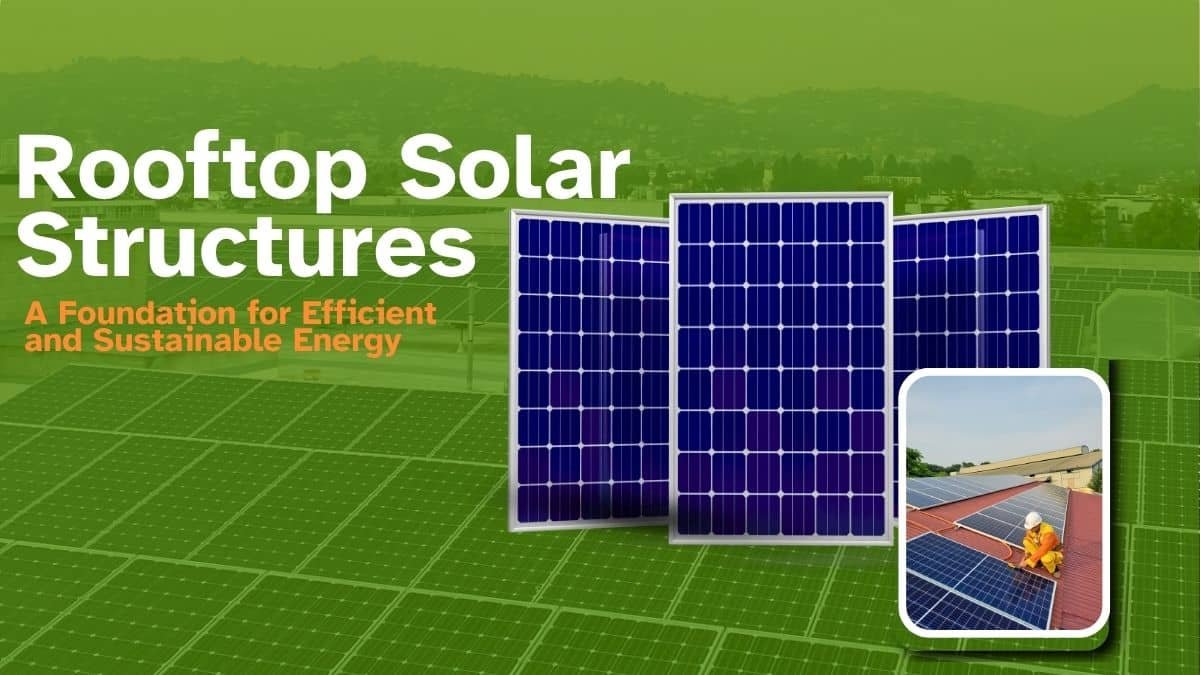
One of the primary advantages of rooftop solar structures in india is efficient space utilisation. They make use of existing rooftop areas, eliminating the need for additional land and making them ideal for urban environments. These structures also contribute to improved energy efficiency by ensuring optimal solar panel positioning for maximum sunlight exposure. Additionally, they enhance system durability by securely holding solar panels on the roof in place and protecting them from environmental stress and keeping them in optimal position to receive maximum sunlight. From an economic standpoint, rooftop solar systems support long-term cost savings by enabling consistent energy generation and reducing electricity bills. They also allow relatively quick installation and are adaptable to different building types, making them a flexible solution for a wide range of users.
4. Disadvantages of Rooftop Solar Structures
Despite their many benefits, rooftop solar systems do have certain limitations. One of the key challenges is structural dependency, as the roof must be strong enough to support the additional load of the rooftop solar system. In some cases, this may require reinforcement, increasing initial costs. Maintenance access can also be slightly challenging, depending on the type of installation, particularly in tightly spaced or complex roof designs. Additionally, improper installation of solar panels or poor-quality structures can lead to issues such as water leakage or reduced rooftop solar system performance. Environmental factors like high wind speeds or heavy rainfall also demand robust design and engineering, which, if overlooked, can affect rooftop solar system longevity.
5. Future of Rooftop Solar Structures
The future of rooftop solar structures in india looks promising as technology and design innovations continue to evolve. Lightweight and high-strength materials are being developed to reduce load on rooftops while maintaining durability. There is also a growing trend toward modular and prefabricated structures that allow for faster and more efficient installation. Integration with smart technologies is expected to improve monitoring and maintenance, enhancing overall system performance. Additionally, aesthetic improvements and building-integrated solar designs are gaining popularity, especially in urban architecture. As the demand for clean energy increases and policies continue to support solar adoption, rooftop solar systems will play a crucial role in shaping a more sustainable and energy-efficient future.
5. Conclusion
Rooftop solar systems are a fundamental component of any solar installation, playing a critical role in performance, safety, and durability. Their design, type, and material directly influence the efficiency and reliability of the system. While there are certain challenges, the advantages far outweigh the limitations, especially when supported by proper engineering and quality installation. As the solar industry continues to grow, investing in well-designed rooftop solar structures will remain essential for achieving long-term sustainability and energy independence.