

1. Introduction
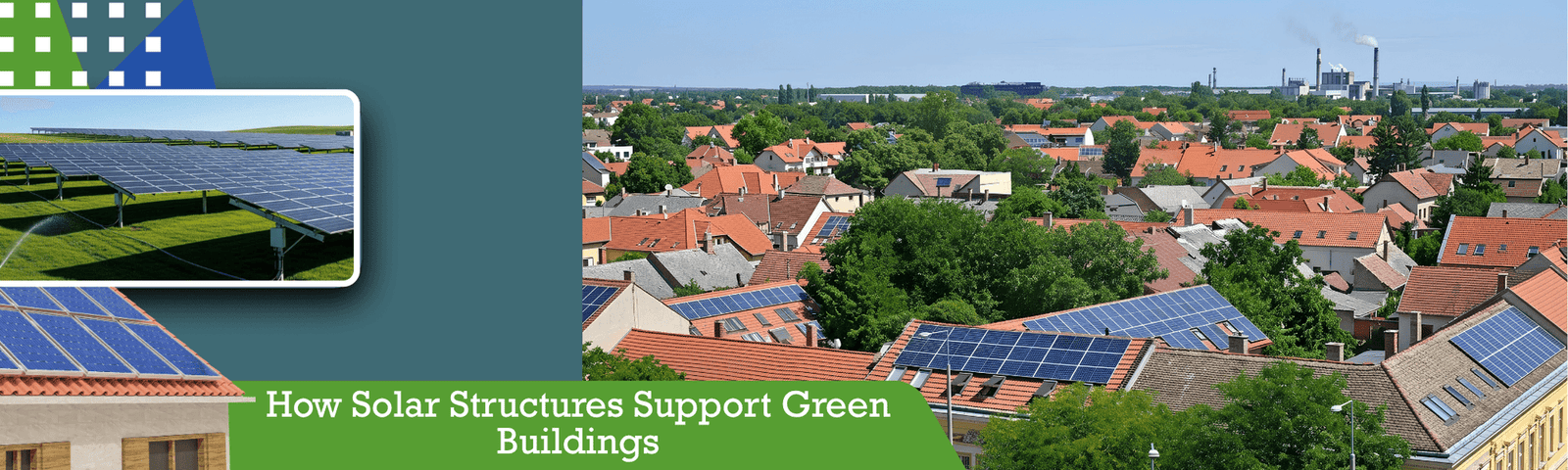
The construction industry is rapidly evolving toward sustainability, energy efficiency, and environmentally responsible development. As concerns about climate change and rising energy consumption continue growing, green buildings are becoming an important solution for creating cleaner and more efficient urban infrastructure.
In fact, one of the key technologies supporting green buildings is solar energy. However, solar panels alone cannot deliver efficient performance without a reliable support system. This is where solar mounting structures play a crucial role.
As a result, solar structures form the backbone of rooftop and ground-mounted solar systems by securely supporting solar panels and helping maximize energy generation. In modern sustainable construction, these structures are becoming an essential component of green building infrastructure.
2. What are Green Buildings?
Essentially, Green buildings are structures designed to reduce environmental impact while improving energy efficiency, resource conservation, and occupant well-being.
These buildings focus on:
⦁ Lower energy consumption
⦁ Sustainable construction practices
⦁ Renewable energy integration
⦁ Reduced carbon emissions
⦁ Efficient use of natural resources
⦁ Long-term environmental sustainability
Consequently, Green buildings often include renewable energy systems such as rooftop solar installations to reduce dependence on conventional electricity sources.
3. Understanding Solar Mounting Structures
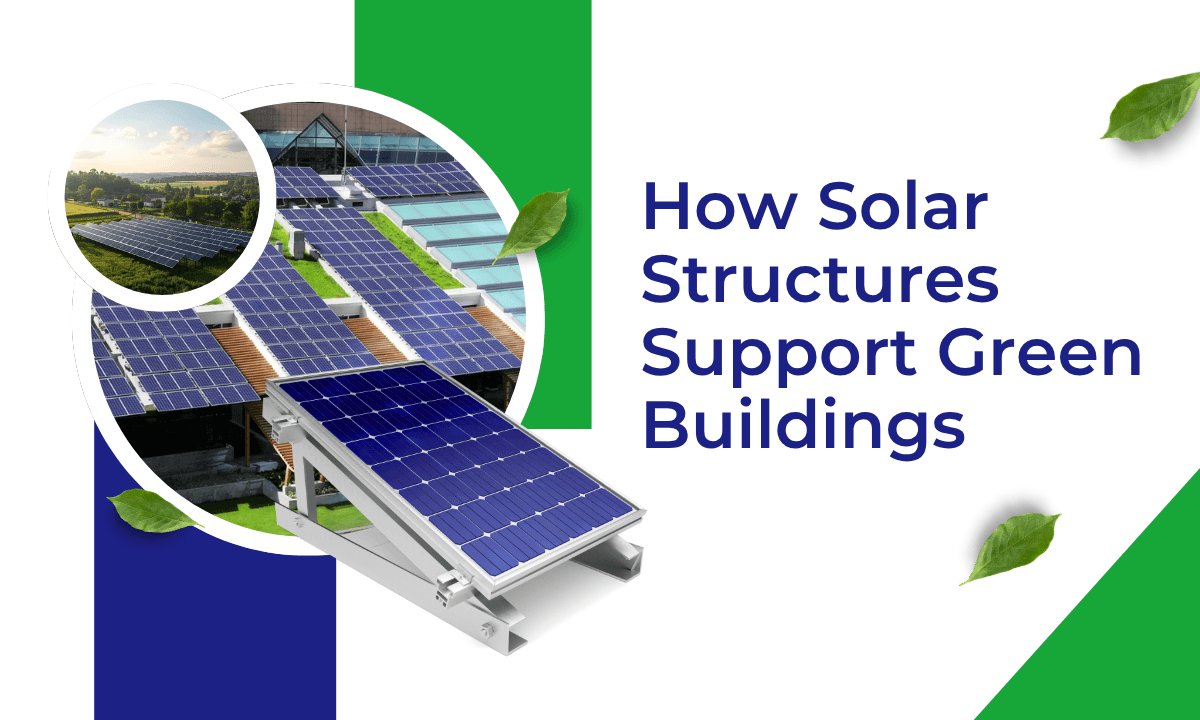
In simple terms, solar mounting structures are engineered frameworks that support solar panels securely in place. These structures ensure proper panel positioning, tilt angle, and stability for efficient solar energy generation.
Solar mounting systems are commonly used in:
⦁ Residential rooftop solar systems
⦁ Commercial solar projects
⦁ Industrial solar plants
⦁ Utility-scale solar farms
⦁ Green building infrastructure
Additionally, modern solar structures are designed using durable and corrosion-resistant materials such as galvanized Iron/steel and aluminium for long operational life.
4. Importance of Solar Structures in Sustainable Construction
In green buildings, every component contributes toward sustainability and energy efficiency. Solar mounting structures are important because they enable buildings to generate renewable energy directly from sunlight.
However, without proper mounting systems, solar panels may not perform efficiently or safely over the long term.
Well-designed solar structures help:
Therefore, this makes solar structures an essential part of sustainable building design.
5. How Solar Structures Support Green Buildings
Enabling Renewable Energy Generation
First, Solar structures support rooftop solar systems that generate clean electricity without harmful emissions. This helps green buildings reduce dependence on fossil fuel-based power sources.
Maximizing Rooftop Space
Furthermore, Solar mounting structures help convert unused rooftop areas into productive energy-generating spaces, improving building efficiency.
Supporting Energy Independence
Moreover, Buildings equipped with solar systems can generate their own electricity, reducing dependence on external power grids and rising electricity costs.
Reducing Carbon Footprint
In addition, solar-powered green buildings contribute to lower greenhouse gas emissions and environmentally responsible urban development.
Encouraging Sustainable Infrastructure
Finally, Solar structures help integrate renewable energy into modern construction projects, supporting long-term sustainability goals.
6. Benefits of Solar Structures for Modern Infrastructure
Improved Structural Stability
High-quality solar mounting structures provide strong support against wind, rain, and environmental exposure.
Long-Term Durability
Likewise, corrosion-resistant solar structures are designed to last for decades with minimal maintenance.
Faster Solar Installation
Similarly, Modern mounting systems allow efficient and quicker installation processes.
Better Energy Efficiency
Meanwhile, correct panel orientation and tilt angles improve sunlight absorption and electricity generation.
Low Maintenance Requirements
Well-engineered solar structures require limited maintenance while ensuring reliable long-term performance.
7. Role of Rooftop Solar Systems in Green Buildings
Rooftop solar systems are becoming a major feature of sustainable commercial and residential buildings.
These systems help green buildings:
Solar structures make rooftop solar installations possible by providing safe and durable support systems.
8. Importance of Durable and Efficient Solar Structures
The performance of a solar energy system depends heavily on the quality of its mounting structure.
Strong solar structures help:
As green buildings focus on long-term sustainability, durable solar structures become increasingly important.
9. Solar Structures and Energy Efficiency
Energy efficiency is one of the primary goals of green buildings. Solar structures contribute to this by helping solar panels capture maximum sunlight throughout the day.
Properly engineered solar mounting systems improve:
As a result, this leads to better electricity generation and improved renewable energy utilization.
10. Challenges in Green Building Solar Integration
Despite their advantages, integrating solar systems into green buildings also involves certain challenges.
Roof Design Compatibility
Different building designs require customized solar structure solutions.
Structural Load Considerations
Additionally, Buildings must be capable of supporting the additional weight of solar systems.
Environmental Exposure
Solar structures must withstand heat, humidity, rainfall, and wind conditions over long periods.
Installation Planning
Ultimately, Proper engineering and site assessment are essential for efficient solar integration.
However, advancements in solar mounting technology continue helping developers overcome these challenges effectively.
11. Future of Solar Structures in Sustainable Infrastructure
The future of solar mounting structures in green buildings looks highly promising as renewable energy adoption continues to increase globally.
Future trends may include:
With increasing focus on smart cities and sustainable urban infrastructure, solar structures will remain a key part of future construction projects.
12. Conclusion
Solar mounting structures are playing a major role in supporting green buildings and sustainable infrastructure development. By enabling rooftop solar energy generation, improving energy efficiency, and supporting clean power adoption, these structures contribute significantly to environmentally responsible construction.
As renewable energy becomes more important in modern infrastructure planning, the demand for durable, efficient, and high-performance solar structures will continue growing rapidly.
In short, solar structures are no longer just support systems for panels — they are essential components helping shape the future of sustainable buildings and green energy infrastructure.
13. FAQ’S
Solar mounting structures are frameworks used to securely support solar panels in rooftop and ground-mounted solar systems.
They enable renewable energy generation, improve energy efficiency, and help reduce carbon emissions in sustainable buildings.
Rooftop solar systems help lower electricity consumption, reduce operating costs, and support clean energy generation.
Galvanized steel and aluminum are commonly used because of their durability and corrosion resistance.
They maintain proper tilt angles and orientation for maximum sunlight absorption and energy generation.
Yes, high-quality solar structures are designed for long-term outdoor use and can last for decades.
Challenges may include roof compatibility, structural load requirements, and environmental exposure considerations.
With growing renewable energy adoption and green infrastructure development, solar structures are expected to witness significant growth in the coming years.