

1. Introduction
Solar power is changing the way we use electricity. It helps you lower power bills and reduce your dependence on traditional energy sources. But not every solar system works the same way.
The three main types of solar systems are On-Grid, Off-Grid, and Hybrid. Each system offers different benefits. The right choice depends on your energy needs, location, and budget.
In this guide, you will learn how these systems work and which one suits you best.
2. What is an On-Grid Solar System?
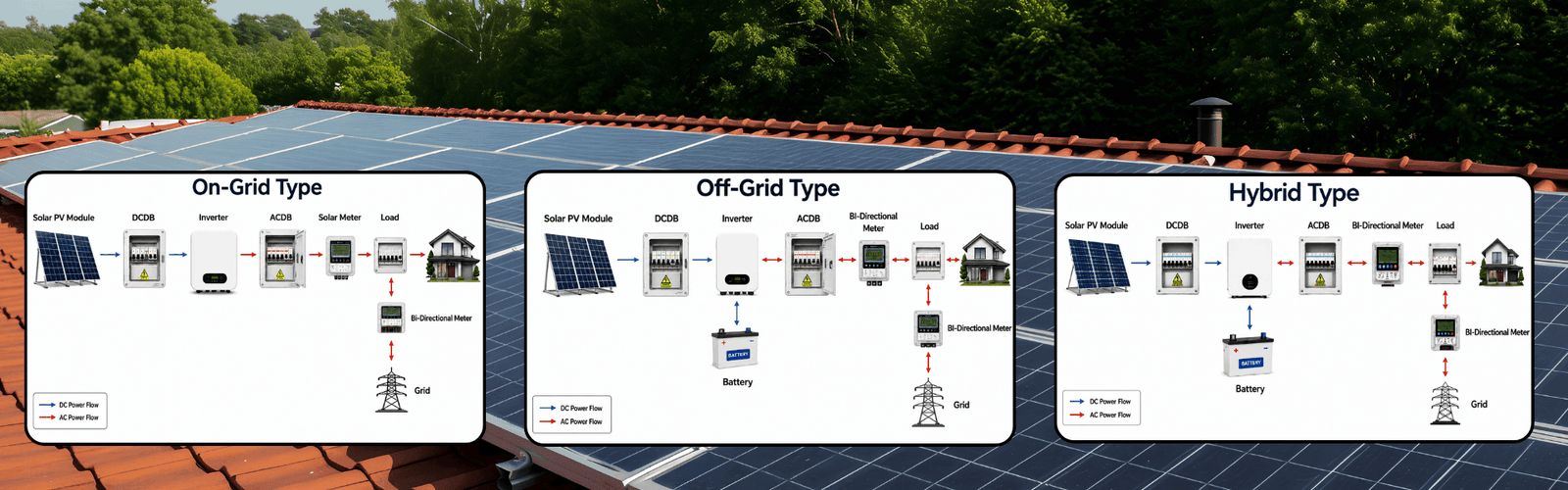
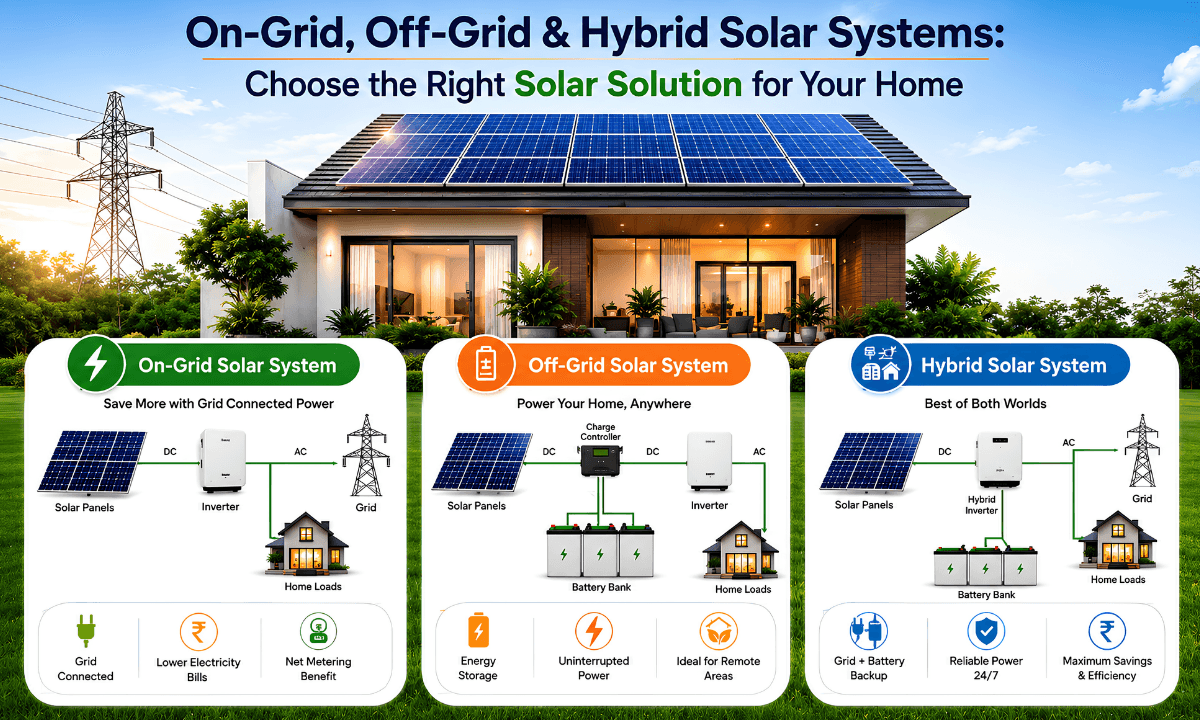
An on-grid solar system is directly connected to the electricity grid. It powers your home or business during the day using solar energy.
When your panels produce extra electricity, the system sends it back to the grid. You can earn credits through net metering where available.
This system does not require batteries. For safety reasons, it stops working during a power outage.
3. Benefits of an On-Grid Solar System
4. What is an Off-Grid Solar System?
An off-grid solar system works without the electricity grid. It stores solar energy in batteries for use during the day and night.
This system gives complete energy independence. It works well in remote locations where grid power is unavailable.
5. Benefits of an Off-Grid Solar System
6. What is a Hybrid Solar System?
A hybrid solar system combines the features of on-grid and off-grid systems. It connects to the grid and also includes battery storage.
The system uses solar power first. It stores extra energy in batteries. It can also draw electricity from the grid when needed.
Hybrid systems provide reliable backup during power cuts while helping reduce electricity bills.
7. Benefits of a Hybrid Solar System
Stores extra solar energy.
8. On-Grid vs Off-Grid vs Hybrid Solar System
Feature | On-Grid | Off-Grid | Hybrid Grid |
Connection with grid | Yes | No | Yes |
Battery Required | No | Yes | Yes |
Backup During Power Cut | No | Yes | Yes |
Sends Power to Grid | Yes | No | Yes |
Best For | Cities and towns | Remote locations | Homes and businesses needing backup |
Initial Cost
| Low
| High
| Medium to High Electricity |
Bills | Lowest with net metering | No grid bills | Lower bills with backup
|
9. Which Solar System Should You Choose?
Choose an On-Grid Solar System if you have a reliable grid connection and want to reduce electricity bills.
Choose an Off-Grid Solar System if your location has no grid access or frequent supply issues.
Choose a Hybrid Solar System if you want lower electricity bills and uninterrupted backup during power failures.
Always evaluate your energy needs before choosing from the available types of solar systems.
10. Conclusion
Every types of solar system offers unique advantages.
An on-grid system helps you save more on electricity bills.
An off-grid system gives complete energy independence.
A hybrid system provides the perfect balance of savings and power backup.
Choose a trusted solar partner to design the right system for your home or business. A well-planned installation delivers better performance for years to come.
11. FAQ’S
A hybrid solar system is a great choice if you want power backup. An on-grid system works well if you have a reliable electricity supply.
No. It automatically shuts down during a power outage for safety.
Yes. Batteries store solar energy and supply electricity when sunlight is unavailable.
Yes. It combines lower electricity bills with battery backup, making it a reliable long-term solution.
An on-grid solar system usually has the lowest installation cost because it does not require batteries.
Yes. In many cases, you can upgrade by adding compatible batteries and a hybrid inverter.
A hybrid or off-grid solar system is the better choice because both provide backup power.
Solar panels typically perform efficiently for 25 years or more with proper maintenance.