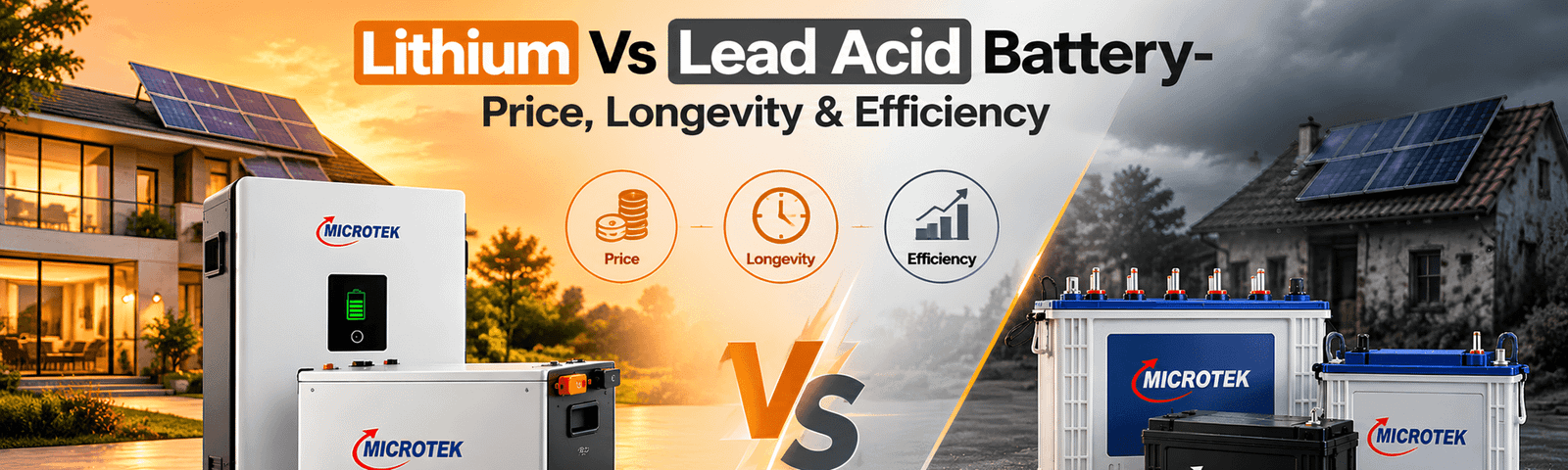
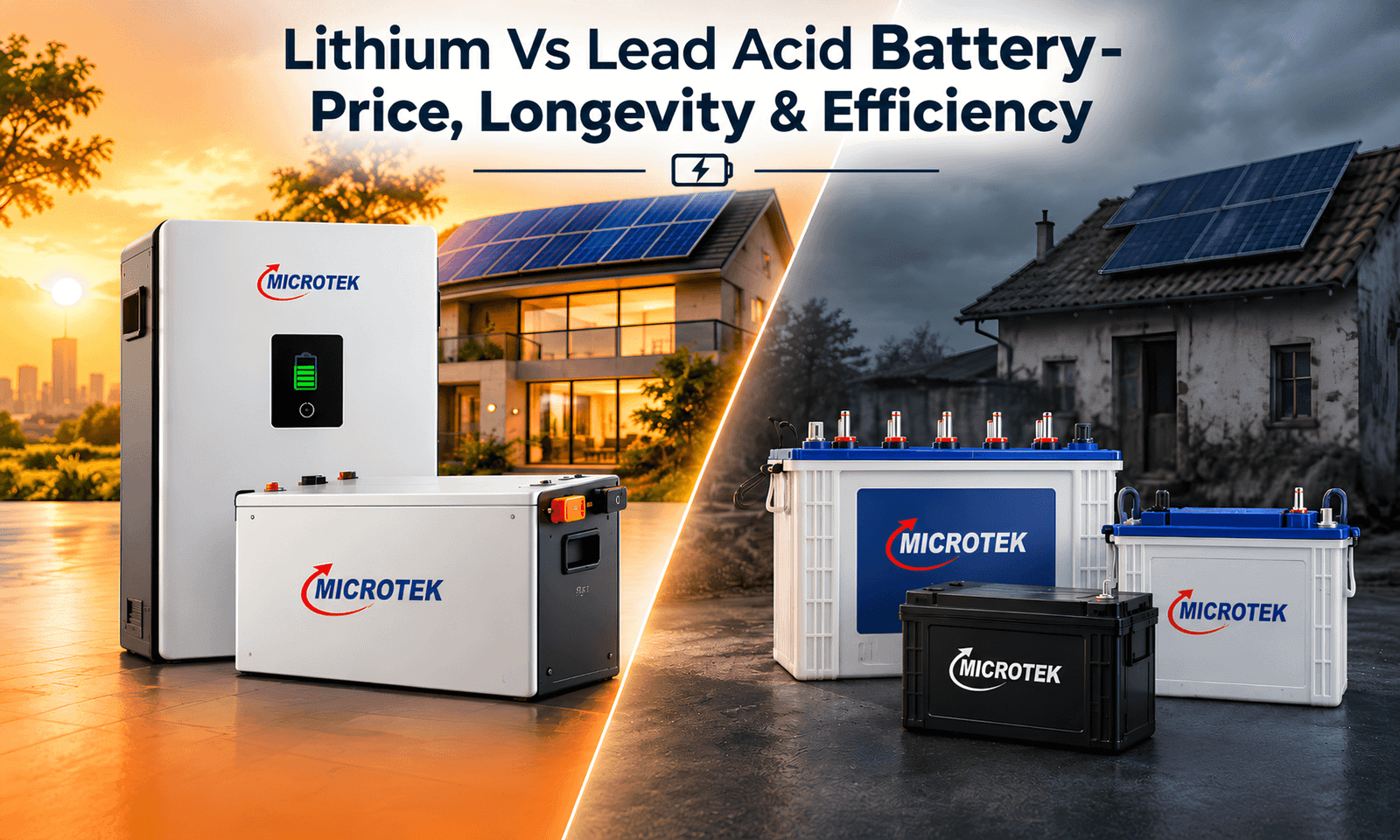
The right battery can impact your solar energy system in a big way.
Today, two battery types dominate many backup and energy storage applications: lithium batteries and lead-acid batteries. Both can store energy. However, they differ in cost, lifespan, performance, maintenance, and efficiency.
So, how do you choose the right option?
This blog compares lithium battery vs lead acid battery so that you can make a more informed choice for your home or business.
1. What Is a Lithium Battery?
A lithium battery stores electrical energy using lithium-based cells.
These batteries offer high energy density. Therefore, they can store more energy in a more compact and smaller package.
Lithium batteries also support frequent charging and discharging. Moreover, they usually deliver consistent performance throughout their operating cycle.
Lithium batteries can store excess solar power during the day for later solar applications. You can then use that stored energy during the evening or during a power outage.
They work well in:
- Residential solar systems
- Commercial energy storage
- Battery Energy Storage Systems (BESS)
2. What Is a Lead-Acid Battery?
Lead-acid batteries store electrical energy. They use lead plates and an electrolyte.
They have been used for powering homes, businesses, vehicles, and backup systems for decades. Its technology is widely available and familiar.
Lead-acid batteries cost less while buying. However, they usually require more maintenance depending on the battery type, which can add to the overall expenses on them.
Common applications include:
3. Lithium Battery vs Lead – Acid Battery
The best battery for you depends on your requirements.
However, lithium batteries usually offer great advantages in terms of energy density, capacity, life span, and charging speed. Meanwhile, lead-acid batteries provide a lower upfront investment.
Here is a simple comparison:
Factor | Lithium Battery | Lead-Acid Battery |
Initial cost | Higher | Lower |
Lifespan | Generally, longer | Generally shorter |
Energy density | Higher | Lower |
Weight | Lighter | Heavier |
Charging speed | Faster | Slower |
Usable capacity | Generally higher | Generally lower |
Maintenance | Usually low | Can be higher |
Cycle life | Generally higher | Generally lower |
Space requirement | Lower | Higher |
Best suited for | Frequent cycling and long-term use | Budget-focused backup applications |
Actual performance can vary based on battery chemistry, model, operating conditions, depth of discharge, temperature, and system design.
4. Cost Comparison
The first factor that you look at when selecting a battery is often its cost.
Lead-acid batteries market prices are usually lower. Therefore, they can look attractive when you have a limited initial budget.
However, purchase price does not tell the complete story.
Additional expenses may happen through replacement, maintenance, installation, energy losses, and system operation. Therefore, you should consider the total cost of ownership rather than only the initial price.
Lithium batteries typically require a higher initial investment. However, their longevity and higher capacity can enhance their long-term value.
So think beyond the purchase price for your best experience.
You can ask these questions:
- How often will you use the battery?
- How much energy do you need to store?
- How frequently will you charge and discharge it?
- How long do you expect the system to operate?
- What maintenance will it require?
- How much space do you have?
5. Lifespan Comparison
Battery lifespan depends heavily on usage and operating conditions.
Lithium batteries generally support more charge-discharge cycles than conventional lead-acid batteries.
For example, a solar system may charge during the day and discharge during the evening. Therefore, the battery can experience frequent cycling throughout the year.
Lithium technology can handle this type of repeated cycles efficiently.
Lead-acid batteries can also work well in solar applications. However, frequent deep discharges can lower their efficiency.
Therefore, your usage pattern matters just as much as battery technology.
7. Charging Speed
Lithium batteries generally accept higher charging rates. They can recharge faster when the right charger and system configuration are used.
This feature can become especially useful in solar systems.
For example, if your system has limited sunlight hours, faster charging can help you capture and store more energy for evening and nighttime.
Lead-acid batteries need more time to be charged. Therefore, they take more time to store the same amount of energy comparatively.
8. Maintenance Requirements
Modern lithium batteries usually require minimal routine maintenance. Also, integrated battery management systems can monitor important operating conditions.
Lead-acid batteries can require more attention, particularly in certain flooded configurations you may need to monitor electrolyte levels, ventilation, and other operating conditions.
However, sealed lead-acid options require less maintenance.
High maintenance charges can increase your long-term operating costs.
So, always check the manufacturer’s maintenance instructions before installation.
9. Safety and Installation
Both battery technologies require proper installation.
A qualified professional can select the correct battery with proper capacity, protection devices, cables, inverter compatibility, and installation environment.
Lithium battery systems often include a Battery Management System (BMS). It helps monitor factors such as voltage, temperature, and charging, etc.
Lead-acid systems also require suitable protection and ventilation, especially when using flooded batteries.
Therefore, never select a battery based on price alone.
A properly designed system improves safety, reliability, and performance.
10. Lithium Battery vs. Lead-Acid Battery for Solar Energy Storage
Solar energy storage has become more important nowadays as more users want to use solar power beyond daylight hours.
Lithium batteries can be a good choice for users who need:
- Lower routine maintenance
On the other hand, lead-acid batteries can suit users who need:
- Simple backup applications
- Established battery technology
Finally, the right choice for your needs depends on your budget, available space, and expected usage.
11. How to Choose the Right Battery
Before purchasing a battery, evaluate your complete energy system.
11.1. Calculate Your Energy Requirement
Identify how much energy you need during backup hours.
11.2. Check Your Solar Capacity
Make sure your solar system can generate enough energy to charge the battery fully.
11.3. Understand Your Usage Pattern
Daily cycling requires a different approach than occasional backup.
11.4. Compare Total Cost
Look beyond the initial price. Consider lifespan, maintenance, replacement, and efficiency.
11.5. Check Inverter Compatibility
The battery and inverter must work together correctly.
11.6. Consider Available Space
If installation space is limited, a compact battery can provide an advantage.
11.7. Think Long Term
A battery is a long-term energy investment. Therefore, consider how your energy needs may change over time.
12. Which Battery Should You Choose?
If you want a compact solution with higher capacity, fast charging, and frequent cycling capability, lithium batteries can be a good option.
If your priority is a lower initial investment for a basic backup application, lead-acid batteries can work for you.
At GoRewatt, the goal is simple; we help you choose the technology that delivers the perfect balance of performance, reliability, and long-term value.
13. Final Takeaway
The choice between lithium and lead-acid technology depends on how you plan to use your energy storage system.
Lithium batteries generally offer stronger long-term performance and efficiency. Meanwhile, lead-acid batteries can provide a cost-effective solution for selected backup applications.
Therefore, compare more than the purchase price.
Look at lifespan, usable capacity, efficiency, charging speed, maintenance, and total ownership cost. With the right comparison, you can select a battery that supports your energy needs today and in the future.