

1. Introduction
India’s renewable energy sector is expanding rapidly, creating strong demand for reliable and efficient solar mounting systems. Whether it is a residential rooftop solar installation or a utility-scale solar park, the foundation of every successful solar project lies in a durable and properly engineered mounting framework.
Among the most used systems in the solar industry are SMS (Small Mounting Structures) and GMS (Ground Mounting Structures). Both play an important role in supporting solar panels safely while improving power generation efficiency, but they are designed for completely different project requirements.
As rooftop solar systems, industrial solar plants, and utility-scale solar farms continue growing across India, understanding the difference between SMS and GMS systems has become essential for EPC companies, solar developers, homeowners, and commercial investors.
Selecting the right solar panel structure not only improves energy generation but also enhances long-term system durability, operational safety, and maintenance efficiency.
2. Understanding Solar Mounting Structures
Solar mounting structures are specially engineered frameworks designed to support solar panels securely in position. These systems maintain the proper tilt angle and orientation required for maximum sunlight absorption and long-term performance.
A high-quality solar structure helps improve:
⦁ Solar panel efficiency
⦁ Structural strength
⦁ Wind resistance
⦁ System lifespan
⦁ Ease of maintenance
⦁ Overall solar plant
Today, solar mounting systems are widely used in rooftop solar projects, industrial installations, solar farms, commercial buildings, and agricultural solar applications across India.
A well-designed solar panel structure is critical for ensuring stable and efficient energy generation under varying environmental conditions.
3. What is an SMS Structure in Solar Projects?
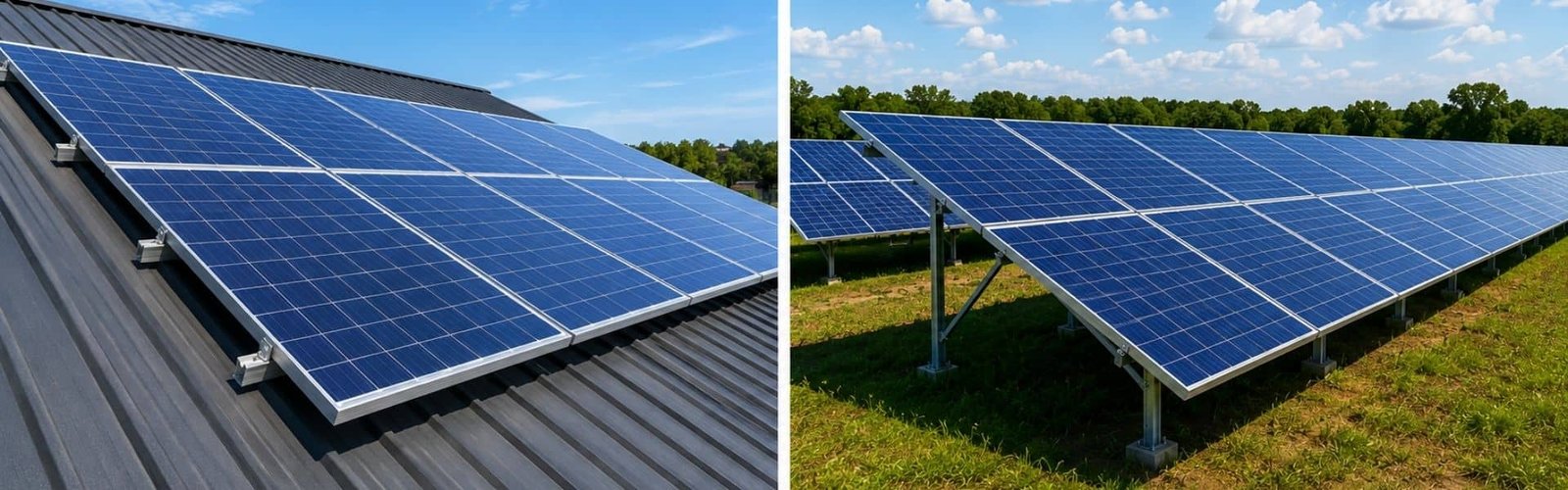
SMS stands for Small Mounting Structure. These systems are primarily used for rooftop solar installations and smaller renewable energy projects.
SMS structures are lightweight, compact, and specially designed for urban solar applications where rooftops are used for solar power generation. They are commonly installed on homes, office buildings, schools, hospitals, commercial complexes, and warehouses.
Common Applications of SMS Structures
⦁ Residential rooftop solar systems
⦁ Commercial rooftop solar projects
⦁ Small industrial solar systems
⦁ Institutional solar installations
⦁ Urban renewable energy projects
SMS structures are highly preferred in cities where land availability is limited, and rooftop solar adoption is increasing rapidly.
SMS systems are becoming increasingly popular because of the rapid growth of rooftop solar adoption in cities and urban infrastructure projects.
Since urban areas have limited land availability, SMS-based solar panel structure systems provide an efficient way to utilize unused rooftop space for renewable energy generation.
4. What is a GMS Structure in Solar Projects?
GMS stands for Ground Mounting Structure. These systems are used for installing solar panels directly on open land for large-scale electricity generation.
Ground-mounted solar structures are commonly used in:
⦁ Utility-scale solar farms
⦁ Industrial solar power plants
⦁ Agricultural solar installations
⦁ Commercial ground-mounted solar projects
GMS systems are designed for heavy-duty performance and are capable of handling large solar capacities and harsh outdoor environmental conditions.
A properly engineered solar structure for ground-mounted systems ensures stability, durability, and long-term operational performance even in high wind and extreme weather conditions.
5. Key Differences Between SMS and GMS Structures
Although both SMS and GMS systems serve the same purpose of supporting solar panels, they differ significantly in design, application, installation process, and scalability.
Installation Location
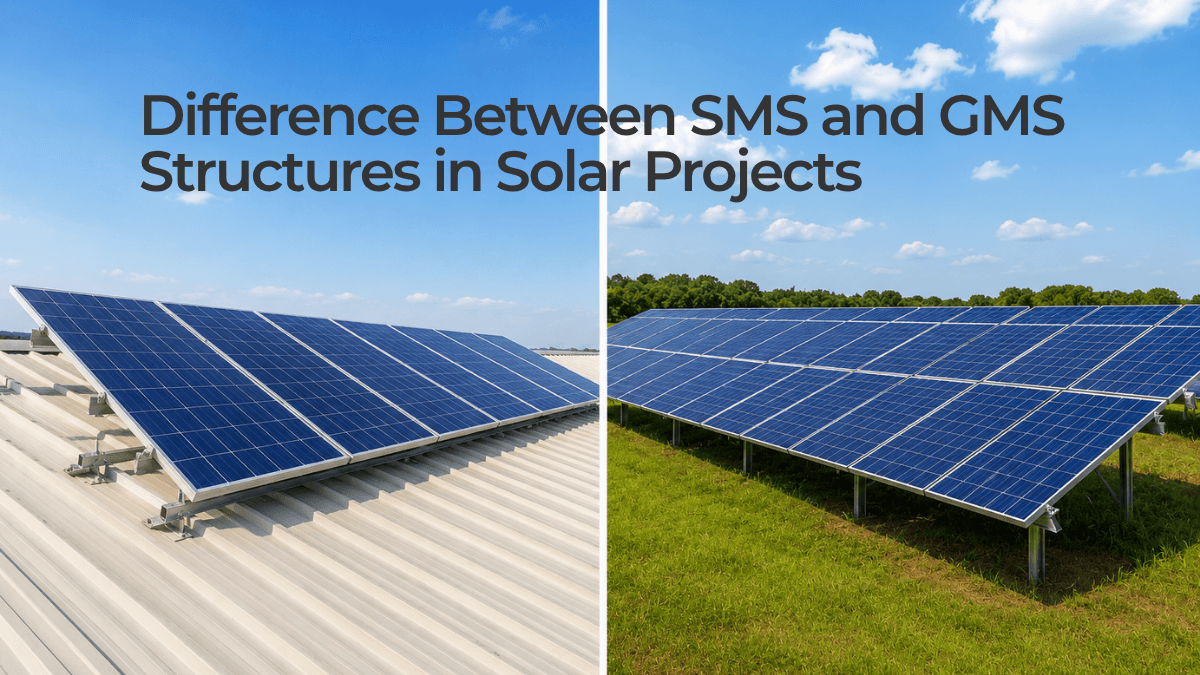
SMS structures are installed on rooftops, while GMS systems are installed on open ground areas.
Project Scale
SMS systems are ideal for small and medium rooftop projects, whereas GMS systems support utility-scale solar farms and industrial solar infrastructure.
Structural Design
SMS structures are lightweight and compact, while GMS systems are built with stronger and heavier structural components for large-scale outdoor installations.
Land Requirement
Rooftop SMS systems do not require additional land, whereas GMS projects require dedicated open land space.
Maintenance Accessibility
Ground-mounted systems generally offer easier cleaning and maintenance access compared to rooftop installations.
Scalability
GMS systems offer greater flexibility for future expansion and higher solar generation capacity.
6. SMS vs GMS Structures Comparison Table
| Feature | SMS Structure | GMS Structure |
|---|---|---|
|
Installation Type |
Rooftop Solar Installation |
Ground-Mounted Solar Installation |
|
Suitable For |
Residential & Commercial Rooftops |
Solar Farms & Industrial Projects |
|
Project Capacity |
Small & Medium Scale |
Large Utility-Scale |
|
Land Requirement |
No Additional Land Needed |
Requires Open Land |
|
Structural Weight |
Lightweight |
Heavy-Duty |
|
Installation Speed |
Faster Installation |
More Complex Installation |
|
Foundation Requirement |
Minimal |
Strong Ground Foundation |
|
Maintenance Access |
Moderate |
Easier Access |
|
Wind Resistance |
Moderate to High |
High Wind Load Capacity |
|
Scalability |
Limited by Roof Area |
Highly Expandable |
|
Comman Usage |
Urban Rooftop Solar Systems |
Utility Projects |
7. Advantages of SMS Structures for Rooftop Solar Projects
Efficient Rooftop Utilization
SMS systems help convert unused rooftops into productive renewable energy spaces.
Lower Infrastructure Cost
Compared to utility-scale ground-mounted systems, rooftop solar installations generally involve lower structural and civil work costs.
Faster Installation Process
Lightweight SMS structures allow quicker project execution and easier installation.
Ideal for Urban Solar Adoption
These systems are highly suitable for residential and commercial buildings in cities.
Long-Term Energy Savings
Rooftop solar systems supported by SMS structures help reduce electricity bills and improve energy independence.
8. Advantages of GMS Structures for Solar Farms
High Scalability
GMS systems are ideal for expanding solar farms and utility-scale renewable energy projects.
Better Energy Generation Efficiency
Ground-mounted systems allow optimized panel spacing and positioning for maximum solar output.
Strong Structural Durability
These systems are engineered to withstand long-term outdoor exposure and harsh weather conditions.
Easier Cleaning and Maintenance
Ground-level accessibility improves inspection and maintenance efficiency.
Suitable for Industrial Applications
GMS systems support large-scale power generation for industries, factories, and agricultural infrastructure.
A durable solar panel structure in utility-scale projects significantly improves long-term operational reliability and energy production efficiency.
9. Factors to Consider Before Choosing a Solar Structure
Several important factors influence the selection of the right mounting system.
Available Space
Rooftops generally favor SMS systems, while large open land areas support GMS installations.
Energy Requirement
Higher electricity demand may require larger ground-mounted systems.
Budget and Infrastructure
Project budget, land availability, and civil work requirements influence structure selection.
Environmental Conditions
Wind speed, rainfall, corrosion exposure, and soil conditions must be considered during structural design.
Future Expansion
Projects expecting future capacity expansion generally prefer GMS systems because of better scalability.
10. Growing Demand for Solar Mounting Structures in India
India’s solar energy market is expanding rapidly, creating strong demand for durable mounting systems and advanced renewable energy infrastructure.
Several factors driving this growth include:
⦁ Increasing rooftop solar installations
⦁ Expansion of utility-scale solar farms
⦁ PM Surya Ghar Yojana
⦁ PM KUSUM solar projects
⦁ Growth of industrial solar installations
⦁ Rising demand for sustainable infrastructure
⦁ Increasing focus on clean energy solutions
As solar power generation capacity continues increasing, demand for both SMS and GMS systems is expected to rise significantly across residential, commercial, industrial, and agricultural sectors.
11. Future of SMS and GMS Structures in Renewable Energy
The future of solar mounting systems in India looks highly promising as renewable energy investments continue growing.
Future innovations may include:
⦁ Lightweight high-strength material
⦁ Faster installation technologies
⦁ Advanced corrosion-resistant coatings
⦁ Smart solar tracking systems
⦁ Improved structural engineering designs
⦁ Better land optimization techniques
With the increasing adoption of renewable energy infrastructure, both rooftop and ground-mounted solar structure systems are expected to witness strong long-term market growth.
12. Conclusion
SMS and GMS structures are both essential components of modern solar energy infrastructure, but each serves different project requirements based on installation location, energy demand, and scalability needs.
SMS structures are highly suitable for rooftop solar systems where space optimization, faster installation, and urban energy generation are important. On the other hand, GMS systems are ideal for utility-scale solar farms, industrial solar plants, and large renewable energy projects requiring durability and scalability.
Choosing the right solar structure plays a major role in improving energy generation efficiency, operational safety, maintenance accessibility, and long-term system reliability.
As India continues moving toward clean energy expansion and sustainable infrastructure development, demand for high-quality solar mounting systems will continue growing rapidly across all sectors of the renewable energy industry.
13. FAQs
SMS structures are mainly used for rooftop solar systems, while GMS structures are designed for ground-mounted solar farms and large-scale projects.
SMS structures are generally more suitable for residential and commercial rooftop solar systems.
GMS systems provide scalability, durability, and strong structural support for utility-scale solar projects.
Yes, GMS systems generally involve higher installation, land preparation, and structural costs compared to rooftop systems.
Galvanized steel is commonly used because of its durability, corrosion resistance, and long lifespan.
Expansion depends on available rooftop space and building structural capacity.
Ground-mounted systems provide higher scalability, easier maintenance, better airflow, and improved energy generation efficiency.
A properly engineered mounting system improves solar panel safety, system performance, structural stability, and long-term operational efficiency.