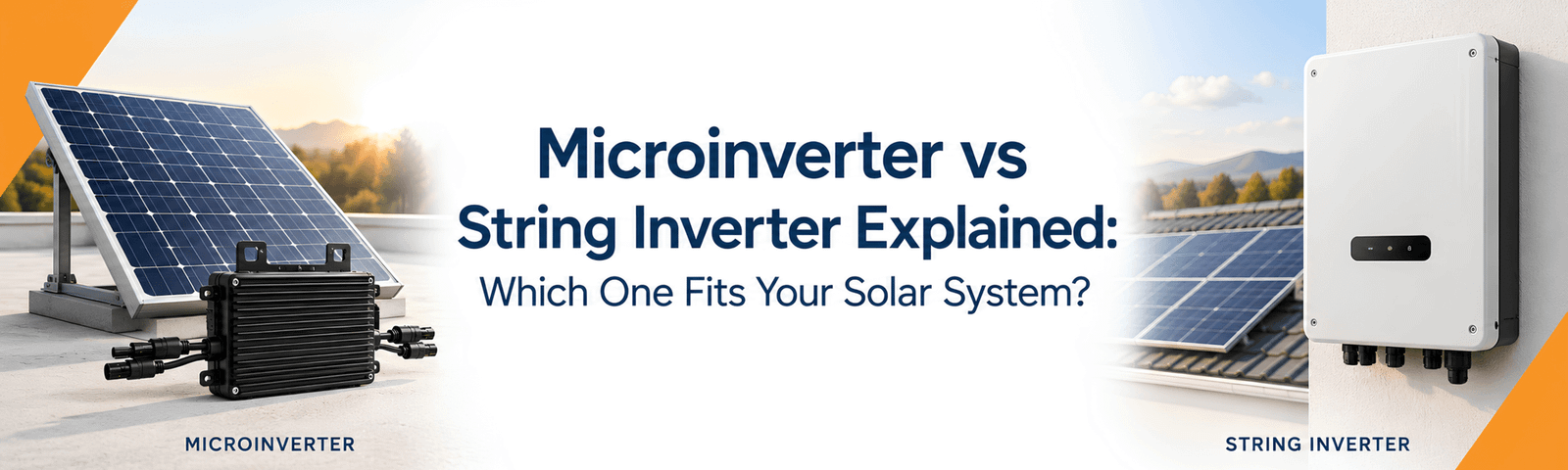
Choosing a solar inverter is not simply about picking a device that converts electricity. It can affect how your entire solar system performs, responds to shading, and handles panel-level issues.
That is why the microinverter vs string inverter comparison matters when planning a rooftop solar installation.
Both options convert the DC electricity produced by solar panels into usable AC electricity. However, they manage that energy in very different ways.
So, how do they work? What sets them apart? And which one should you choose?
Let’s break it down.
1. What Is a Solar Inverter?
Solar panels generate electricity in DC form. Most household and commercial appliances, however, use AC electricity.
The inverter bridges this gap.
It converts the DC from your solar panels into AC that can be used by your building. At the same time, it helps manage system output and provides important operating information.
In a rooftop system, the inverter also works with other components such as panels, protection devices, mounting structures, and the electrical grid.
Therefore, choosing the right inverter is an important part of system design.
2. What Is a String Inverter?
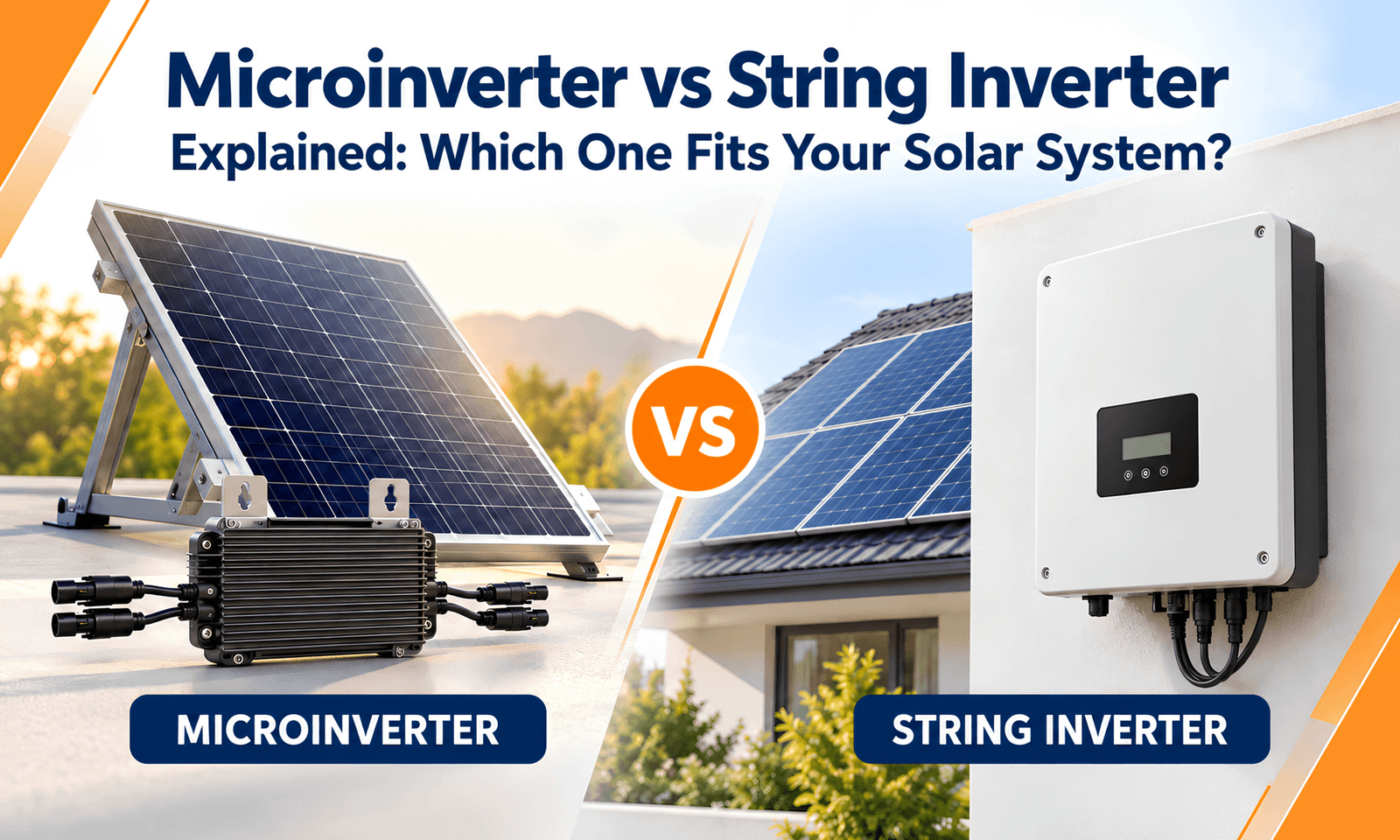
A string inverter connects several solar panels together in a series. This group of panels is commonly called a string.
The connected panels send their combined DC output to one central inverter. The inverter then converts that electricity into AC.
This setup has been widely used in residential, commercial, and industrial solar projects.
Key features of string inverters
Panel mismatch can affect the entire string’s output, as variations in one panel can influence the performance of the other panels connected to the same string.
3. What Is a Microinverter?
Depending on the system design, instead of using one central inverter for several panels, a microinverter is installed with an individual solar panel or a small group of panels.
Each unit converts the panel’s DC into AC closer to the point of generation.
Therefore, the system can manage panel output independently.
Key features of microinverters
This approach can be particularly useful when a rooftop has several roof sections or changing sunlight conditions.
4. Microinverter vs String Inverter: How They Different
The biggest difference comes down to how the system manages individual panels.
In case of a string inverter, many panels work together and send power to one central inverter. With microinverters, conversion happens closer to each individual panel.
Here is a simple comparison:
Feature | String Inverter | Microinverter |
Installation | Central inverter | Panel-level installation |
Panel-level conversion | No | Yes |
Shading management | Can be affected by string conditions | Better panel-level independence |
Monitoring | Usually string/system level | Panel-level monitoring |
Initial equipment cost | Generally lower | Generally higher |
Maintenance access | Usually easier | Requires access to panel-level equipment |
Complex rooftops | May require careful string design | Can offer greater design flexibility |
System expansion | Depends on inverter capacity | Can be more modular |
5. Performance Under Partial Shading
Shading is one of the important factors to consider when designing rooftop solar.
Trees, nearby buildings, water tanks, chimneys, and other structures can create shadows at different times of the day.
With a traditional string arrangement, reduced output from one panel can influence the connected string. The exact influence depends on system design, panel configuration, and inverter technology.
Microinverters approach this differently. Since power conversion happens at the panel level, one shaded panel can operate more independently from the others.
For rooftops with frequent or uneven shading, this difference deserves careful attention.
6. Installation and Maintenance
Installation requirements vary between the two technologies.
A string inverter typically sits at one central location. Installers connect the solar strings to it and then integrate the inverter with the building’s electrical system.
Microinverters, meanwhile, are distributed across the solar array.
That can simplify some system designs, but it also means more electronic units are installed around the panels. Access for future servicing should therefore be considered during the design stage.
Good installation practices matter in both cases. Proper cable management, protection, ventilation, earthing, and commissioning can help maintain reliable system operation.
7. Price Considerations
Price is another major factor when deciding whether to go for microinverter or string inverter.
String inverter systems usually need a lesser number of inverter units. Therefore, their initial equipment cost can be lower.
Microinverter systems use more individual devices, which can increase the upfront investment.
However, the lowest initial price does not automatically represent the lowest overall system value.
Consider the complete picture:
A system that costs more initially may offer features that are valuable for a particular rooftop. On the other hand, a simple, uniform roof may not need those additional capabilities.
8. Which Inverter Should You Choose?
There is no single option that fits every solar project.
A string inverter is a good choice for rooftops that receive consistent sunlight and have a simpler panel layout. It can also help keep the initial equipment costs lower.
A microinverter is a good option when you need panel-level monitoring, have panels facing different directions, or deal with partial shading.
Before deciding, assess the complete site.
Look at roof direction, available space, shading, panel arrangement, electricity consumption, and future expansion. Your installer can then recommend a configuration based on the actual project requirements.
For residential projects, commercial buildings, and larger installations, proper system design matters just as much as the inverter technology itself.
9. Final Thoughts
The microinverter vs string inverter choice comes down to how you want your solar system to operate.
String inverters offer a centralized approach that can work well for straightforward installations. Microinverters provide panel-level conversion and can offer useful flexibility for more complex rooftops.
Most importantly, do not choose an inverter based on price alone. A properly designed system can make a significant difference to long-term solar performance.
Evaluate the roof first. Understand your energy requirements. Then choose the inverter technology that matches the project.
10. FAQ’S
Neither technology is universally better. The suitable option depends on factors such as shading, roof design, system size, budget, and monitoring requirements.
Both can deliver high system efficiency when correctly designed and installed. Actual performance depends on inverter specifications, panel conditions, temperature, shading, and overall system design.
They can be useful for rooftops with partial or uneven shading because each panel can operate more independently. However, a professional site assessment is still important.
Yes. String inverters are widely used for residential solar installations, particularly where panels have similar orientations and receive relatively consistent sunlight.
They can have a higher upfront equipment cost because the system uses multiple inverter units. However, the final project cost depends on system size, installation requirements, equipment selection, and other components.
Yes. Many microinverter systems support panel-level monitoring, allowing users or installers to identify differences in individual panel performance.
Start with the site rather than the inverter name. Review shading, roof orientation, panel layout, system capacity, budget, monitoring needs, and future expansion plans. Then select the technology that fit those requirements.