

1. Introduction
Solar energy depends heavily on weather conditions. The amount of sunlight, cloud cover, temperature, and rainfall all influence how efficiently solar panels generate electricity. That’s why climate patterns like El Niño have become increasingly important in the renewable energy sector.
As the world rapidly shifts toward clean energy, understanding climate behavior helps solar companies, industries, and energy planners prepare for changing environmental conditions.
One major climate phenomenon that affects global weather is El Niño. It impacts temperatures, rainfall patterns, and sunlight levels across different parts of the world — all of which directly influence solar energy generation.
Let’s explore how the El Niño Index connects with solar power and why it matters for the future of renewable energy.
2. What is El Niño?
El Niño is a climate event caused by unusual warming in the Pacific Ocean. When ocean temperatures rise above normal levels, weather conditions around the world begin to change.
These changes may include:
⦁ Higher temperatures
⦁ Reduced rainfall in some regions
⦁ Heavy rainfall in others
⦁ Heat waves
⦁ Drought conditions
⦁ Changes in cloud cover
El Niño usually appears every few years and can last for several months.
It forms part of a larger climate cycle called ENSO (El Niño–Southern Oscillation), which includes:
⦁ El Niño
⦁ La Niña
⦁ Neutral climate conditions
3. What Does the El Niño Index Mean?
Scientists use the El Niño Index to measure the intensity of El Niño conditions in the Pacific Ocean.
The index tracks:
⦁ Sea surface temperatures
⦁ Ocean warming patterns
⦁ Wind behavior
⦁ Atmospheric pressure changes
When temperatures in certain ocean regions rise above average levels, scientists officially declare an El Niño event.
This index helps weather agencies predict climate conditions in advance, allowing industries — including the solar sector — to prepare for possible weather-related impacts.
4. How El Niño Changes Weather
El Niño affects countries differently depending on geography and local climate conditions.
Some regions experience:
⦁ Dry weather
⦁ Strong heat waves
⦁ Clearer skies
Other regions may see:
⦁ Flooding
⦁ Increased storms
⦁ High humidity
⦁ More cloud cover
Because solar energy systems depend on sunlight availability, these weather shifts can significantly influence solar power production.
5. El Niño and Solar Energy
Solar panels generate electricity using sunlight. So naturally, changes in weather directly affect solar performance.
In some areas, El Niño creates clearer skies and lower rainfall, allowing more sunlight to reach solar panels. This can increase solar electricity generation.
However, excessive heat can also reduce panel efficiency. Solar panels perform best under sunlight with moderate temperatures. Extremely high temperatures may lower energy output slightly.
El Niño can also increase dust levels in dry regions, causing dirt buildup on solar panels and reducing their efficiency if regular cleaning is not maintained.
So, while El Niño may improve sunlight conditions in some places, it can also create operational challenges for solar projects.
6. Super El nino 2026
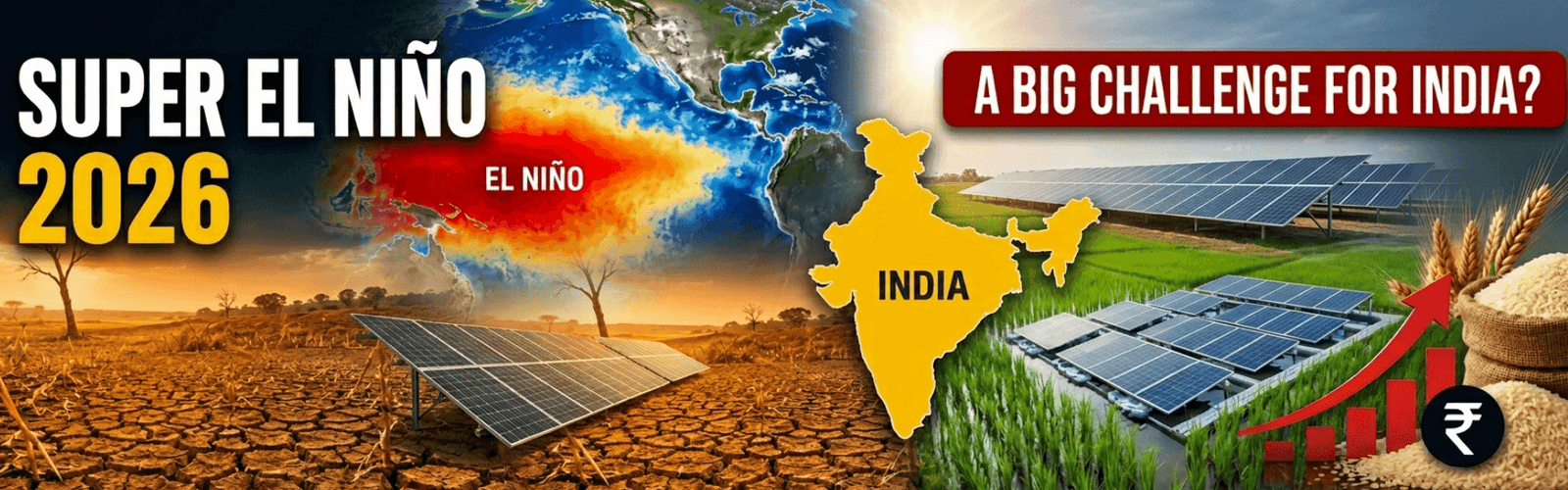
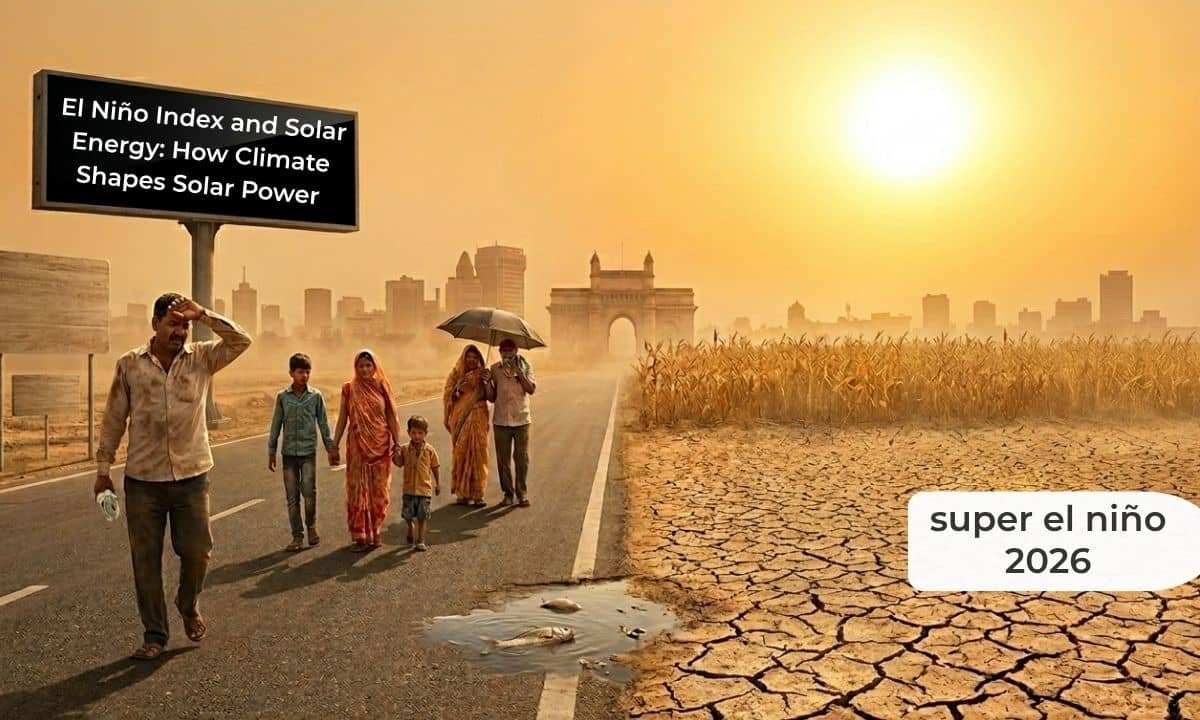
Climate experts across the world are closely monitoring the possibility of a Super El Niño event this year, that is 2026, as global temperatures continue rising and ocean warming intensifies. Unlike regular El Niño conditions, a super El Niño can trigger stronger climate disruptions, including extreme heat waves, irregular monsoons, drought conditions, and sudden heavy rainfall. In India, weather patterns heavily depend on the monsoon season, which means a powerful climate event like Super El Niño 2026 could directly influence agriculture, water availability, power demand, and overall economic activity. Rising temperatures may also increase electricity consumption as cooling requirements grow rapidly across residential, commercial, and industrial sectors.
India’s renewable energy and infrastructure sectors may also feel the effects of super el nino 2026. Higher temperatures and changing rainfall patterns could impact solar power generation efficiency, hydropower production, and energy distribution systems. At the same time, industries may accelerate investments in renewable energy, battery storage, and climate-resilient infrastructure to reduce long-term environmental risks. Experts believe India must strengthen weather forecasting, water management, and clean energy planning to prepare for future climate uncertainties linked to large-scale climate events like super El Niño.
7. Effects on Solar Power Generation
Increased Sunlight Exposure
Clearer skies during El Niño periods can improve solar radiation levels and boost energy generation in certain regions.
Higher Electricity Demand
Hot weather increases the use of air conditioners and cooling systems, leading to higher electricity consumption. This often increases the importance of solar power during daytime peak demand.
Reduced Panel Efficiency from Heat
Although sunlight improves generation, excessive panel temperatures can reduce photovoltaic efficiency.
Dust Accumulation
Dry weather conditions may increase dust accumulation on panels, making regular maintenance more important.
8. Challenges for Solar Projects
El Niño can create several operational challenges for solar infrastructure.
Extreme Temperatures
Very high temperatures can affect equipment performance and increase maintenance requirements.
Water Shortages
Many solar plants use water for panel cleaning. During drought conditions, water availability may become limited.
Grid Stability Issues
Sudden changes in electricity demand during heat waves can place pressure on energy grids.
Unpredictable Climate Conditions
Weather instability makes forecasting and energy management more complex.
These challenges highlight the need for climate-resilient solar infrastructure and smarter energy management systems.
9. New Opportunities for the Solar Industry
Despite the challenges, El Niño also creates opportunities for renewable energy growth.
Faster Renewable Energy Adoption
Rising temperatures and higher electricity demand encourage more businesses and industries to invest in solar energy.
Growth of Battery Storage
Battery energy storage systems help manage fluctuations in solar generation and electricity demand.
Smarter Solar Technologies
Advanced monitoring systems, AI-based forecasting tools, and automated maintenance solutions are becoming increasingly valuable.
Better Energy Planning
Climate forecasting allows solar developers to improve project planning and system optimization.
10. Why Weather Monitoring Matters
Modern solar projects rely heavily on weather forecasting and climate monitoring.
Accurate weather analysis helps:
⦁ Predict solar power generation
⦁ Improve grid management
⦁ Optimize system performance
⦁ Schedule maintenance activities
⦁ Reduce operational risks
Many large solar plants now use:
⦁ Satellite weather tracking
⦁ Real-time monitoring systems
⦁ Predictive analytics
⦁ AI-powered forecasting tools
These technologies help improve efficiency even during changing climate conditions.
11. The Future of Solar in a Changing Climate
Climate change is increasing the frequency of extreme weather events across the world. As a result, the solar industry is focusing more on resilience and adaptability.
Future solar systems may include:
⦁ Heat-resistant solar panels
⦁ Smart energy storage systems
⦁ Automated panel cleaning technologies
⦁ AI-driven weather prediction software
⦁ Advanced solar tracking systems
As renewable energy becomes more important globally, understanding climate events like El Niño will help improve solar planning, energy security, and infrastructure performance.
12. Conclusion
El Niño is more than just a climate phenomenon — it is an important factor influencing renewable energy systems worldwide.
Because solar energy depends heavily on sunlight and weather conditions, El Niño can both improve and challenge solar power generation depending on the region and climate behavior.
Clearer skies may increase solar production, while extreme heat and drought conditions can create operational difficulties. This makes climate monitoring, smart forecasting, and advanced solar technologies increasingly important for the renewable energy sector.
As the world continues moving toward clean energy solutions, understanding the connection between climate patterns and solar energy will play a key role in building a more reliable and sustainable energy future.
13. FAQ’S
The El Niño Index measures ocean temperature changes and atmospheric conditions to identify El Niño climate events.
El Niño changes weather patterns such as sunlight, temperature, rainfall, and cloud cover, which can influence solar power generation.
Yes. In some regions, clearer skies and lower rainfall during El Niño periods can increase solar energy production.
Solar panels work best at moderate temperatures. Excessive heat can slightly reduce their energy conversion efficiency.
Weather forecasting helps improve energy prediction, maintenance planning, and overall solar plant performance.
Yes. Heat waves often increase cooling requirements, leading to higher electricity consumption.
Solar projects use advanced monitoring systems, battery storage, predictive analytics, and smart maintenance practices to manage climate risks.
The future includes smarter, more resilient solar technologies designed to perform efficiently under varying weather conditions.